
Inverness’s Hidden Musical History (and Where to Eat Along the Way)
Most visitors come to Inverness for the Loch Ness monster, the Highland scenery, and the castles. But Church Street holds a quieter and more surprising story in the very heart of the old city. It is a story about music, social history, and an address that has stood at the centre of Inverness life for well over two hundred years. This guide follows the thread. We start at an eighteenth-century ballroom built to lift the spirits of a bruised Highlands. Next, we explore an extraordinary May evening in 1960. We then visit the record shop that kept a city’s musical soul alive. Finally, we end at the cafe that carries this tradition forward today.
- Before you start: Church Street and its layers
- 1788 to 1790: A Society is Born, and a Ballroom Follows
- The Ballroom Years: Royalty, Reels, and Rock and Roll
- 21 May 1960: The Night Inverness Almost Didn’t Know It Mattered
- 1962 Onwards: The Record Rendezvous Takes the Stage
- Your Walking Guide: Five Historical Stops Near Church Street
- Where to Eat: The Rendezvous Cafe Today
- Frequently Asked Questions
Before You Start: Church Street and Its Layers
Church Street runs through the old heart of Inverness. It connects the River Ness to the city centre in a way that has barely changed for centuries. It is not an obvious tourist thoroughfare like the castle esplanade or the riverside. Instead, it feels like a working street, which perfectly reflects its history.
However, if you know what to look for, the layers of history appear everywhere. The Old High Church at the northern end dates back to the twelfth century. Further along, you walk past buildings that hosted poets, politicians, and soldiers. On one particular May evening sixty-five years ago, a young band from Liverpool played here before they even found their famous name.
The address holding the most concentrated history on this street is 14A Church Street, located at the corner of Baron Taylor’s Street. Today, it is home to the Rendezvous Cafe. Yet, the ground beneath it has listened to music for a very long time.
1788 to 1790: A Society is Born, and a Ballroom Follows
To understand what the Rendezvous Cafe site once was, you must go back to 1788. You must look at the aftermath of one of the most important battles in Scottish history.
The famous Battle of Culloden took place in 1746, just a few miles from the city. The Jacobite rising’s defeat and the suppression of the clans left the Highlands economically shattered and socially broken. Forty-two years later, in 1788, thirteen Highland gentlemen gathered in Inverness. They shared a specific and emotional ambition: to lift the spirits of the north.
They formed the Northern Meeting Society. This gathering gave Highland families a reason to travel, meet, and celebrate their culture together. Their vision included music, dance, piping, and Highland Games. The Society quickly recognised they needed their own home to host high-quality annual balls and social events.
A Grand New Venue
In 1789, the group purchased a site on the corner of Church Street and Baron Taylor’s Street. They bought the land from the Inverness Magistrates. The resulting building opened around 1790. Later accounts described it as “a severe classical building with a good and ornate interior.” The creators modelled it on the assembly rooms in Edinburgh to be the finest social venue in northern Scotland. For the next 170 years, it served exactly that purpose.
The Northern Meeting Rooms proved expensive from the moment workers built them. Costs overran significantly, and the building became a financial burden on the Society. It required “continual alteration, extension and repair.” The fact that it survived for over 170 years proves its central role in Highland social life. Some institutions exist because they earn profits. Others exist because people deeply need them. The Northern Meeting Rooms emphatically represented the latter.
The Ballroom Years: Royalty, Reels, and Rock and Roll
For over a century and a half, the Northern Meeting Rooms hosted the annual Highland Ball. This stood as one of the grandest social occasions in the Scottish calendar. The guest list over those years reads like a Who’s Who of Highland aristocracy. Royalty even attended on various occasions. Guests planned for this event months in advance. Everyone considered the right gown, the right partner, and the right connections absolutely essential.
Changing with the Times
However, the building never served only the elite. As Inverness grew through the nineteenth and early twentieth centuries, the Rooms adapted. The downstairs space became a dual-purpose venue. While fine society danced reels in the main hall, a different crowd gathered elsewhere in the building. They enjoyed concerts and performances of an entirely different character.
This flexibility makes the site’s history so interesting. The Northern Meeting Rooms acted as a grand formal venue while reflecting the current cultural moment. By 1960, that cultural moment was rock and roll.
21 May 1960: The Night Inverness Almost Didn’t Know It Mattered
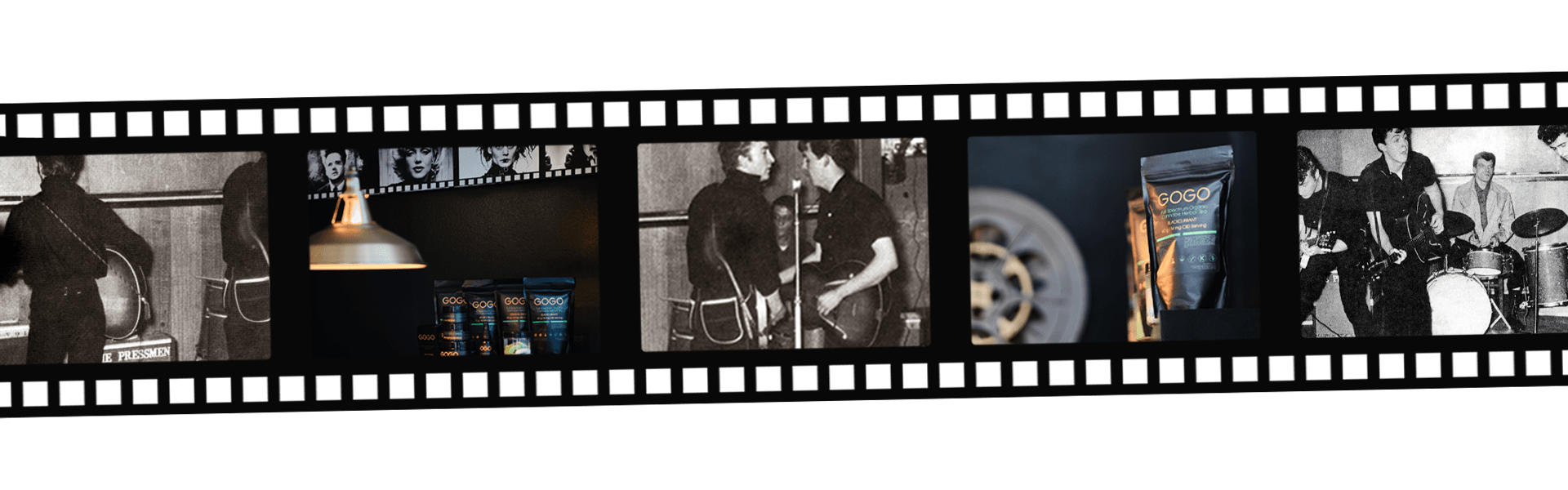
On the evening of 21 May 1960, promoters advertised a show in Inverness called “The Beat Ballad Show.” Admission cost three shillings before eight o’clock, and five shillings after. The headline act featured a young Liverpool singer named Johnny Gentle. His backing group performed as “Johnny Gentle and His Group” because they lacked time to advertise their real name. That backing band consisted of five young men from Merseyside called The Silver Beetles.
A Historic Lineup
Their names were John Lennon, Paul McCartney, George Harrison, Stuart Sutcliffe, and Tommy Moore. Lennon was nineteen. McCartney and Harrison were both just seventeen. This marked the second date of their first professional tour. The London promoter Larry Parnes arranged the trip. They made their touring debut the previous evening in Alloa, 150 miles to the south.
The show ran from seven-thirty in the evening until half-past eleven. Downstairs in the main room, Lindsay Ross and his Famous Broadcasting Band played old-time dance music for an older crowd. Meanwhile, The Silver Beetles played their set upstairs. The traditional and the new worlds of Inverness’s musical life literally clashed on different floors of the same building.
Paul McCartney later described the Scottish tour in unflattering terms. He remembered playing to “nobody in little halls, until the pubs cleared out when about five Scottish Teds would come in and look at us.” Each musician earned just £18 for the entire tour. Reports say they went broke well before the tour ended. A local audience member recalled decades later that the crowd actually “booed off the stage” The Silver Beetles. By any measure, it was not a triumphant evening. However, it remains one of the earliest professional performances by the future Beatles.
A Historic Songwriting Moment
After the show, something quietly remarkable happened in their hotel room. Johnny Gentle worked on a song called I’ve Just Fallen For Someone. John Lennon helped him write the middle eight section by contributing four lines. This stands as one of the earliest documented instances of Lennon writing on the road. A few short weeks later, the band changed their name, adjusted their lineup, and became The Beatles.
The Press and Journal has extensively documented the full account of this early Highland tour.
1962 Onwards: The Record Rendezvous Takes the Stage
In 1962, two years after The Silver Beetles played the stage, the Northern Meeting Society sold the Church Street site. The financial burden of maintaining the old building finally outweighed their emotional attachment. The Society found other homes for its balls and piping competitions across Inverness. Workers soon demolished the 1790 classical building.
A New Era for Music
In its place, developers built a concrete structure. The original thirteen gentlemen of the Northern Meeting would have found this turn of events quite baffling. Yet, this new building went on to house one of the most beloved record shops in the Highlands.
The Record Rendezvous originally operated around the corner in Bridge Street. When the council demolished part of that street in the late 1960s, the shop relocated. It moved into the new Church Street building, taking up residence at what is now 14A. Adverts in the Inverness Courier from 1965 onwards show the shop was already a fixture of the city’s musical life. It proudly advertised itself as “on top with the music of yesterday, today and tomorrow.”
The Golden Age of Vinyl
For decades, the Record Rendezvous was the place to go in Inverness. Its listening booths allowed customers to hear new releases before buying them. The stock ranged from chart singles to obscure imports. People who were teenagers here in the 1970s and 1980s remember it with deep warmth. One regular customer recently described buying a Slade single there in 1973 and still owning it fifty years later.
The Record Rendezvous eventually closed around 2006. However, it left behind one very deliberate memento. The iconic red, record-shaped door handle remained. It was a detail so specific and characterful that no one could mistake it for anything ordinary. The owners kept this handle when the Rendezvous Cafe opened on the exact same site.
Your Walking Guide: Five Historical Stops Near Church Street
If you want to experience Inverness’s layered history properly, the stretch around Church Street rewards a slow and curious walk. Here are five stops worth making. All sit within a comfortable walking distance of the Rendezvous Cafe.
The Old High Church
At the northern end of Church Street stands one of the oldest sites of Christian worship in Inverness. Parts of the building date back to the twelfth century. The churchyard holds graves spanning many centuries. The tower offers a vantage point over the city that makes it clear why builders chose this elevated position.
It is a quiet, uncrowded spot that carries a depth of history disproportionate to its modest size. After the Battle of Culloden in 1746, government forces held Jacobite prisoners in this church. They executed some men in the churchyard. You can still see bullet marks in some of the stones. These marks serve as a sobering reminder of what the city witnessed. This very historical wound prompted the founding of the Northern Meeting Rooms four decades later.
The Inverness Town House
A short walk from the Old High Church sits the Victorian Gothic Town House. It serves as the civic centrepiece of the city and remains the most photographed building on the High Street. Built in 1882, it replaced an earlier town house that stood on the same site. In 1921, the Town House hosted an emergency Cabinet meeting convened by Prime Minister David Lloyd George. This made it the first venue outside London to host a Cabinet meeting. The building remains in civic use today and opens to visitors at various times throughout the year.
The Victorian Market
Tucked behind the High Street, the Victorian Market remains one of Inverness’s best-kept secrets for new visitors. Dating from 1870, the covered market retains much of its original arcade structure. Its character feels entirely different from a modern shopping centre. It feels unhurried, slightly labyrinthine, and features independent traders who have worked there for years. The market connects several streets, making it easy to wander through without realising how far you have walked.
The Site of the Northern Meeting Rooms (14A Church Street)
The original 1790 classical building no longer stands. A functional concrete building replaced it in the 1960s. However, the address itself carries the full weight of the history described in this guide. The Northern Meeting Society held its balls here for 170 years. The Silver Beetles played on this corner on the night of 21 May 1960. Later, the Record Rendezvous kept the city’s musical culture alive here for decades. Today, the Rendezvous Cafe continues the site’s tradition. It remains a place where the community gathers, eats, and feels at home.
Look closely for the red record-shaped door handle. It provides the most tangible surviving connection to the Record Rendezvous era. You will only notice it if you know to look.
Inverness Castle and the Castle Hill Views
A short walk from Church Street brings you to the current Inverness Castle. It dates from the nineteenth century and sits on a commanding position above the River Ness. Developers recently transformed the castle into a major visitor attraction. On a clear day, the views from Castle Hill out towards the Moray Firth rank among the best in the Highlands. You can enjoy this panorama without requiring a significant hike. It makes an excellent final stop before returning to Church Street for lunch or afternoon tea.
Where to Eat: The Rendezvous Cafe and the Legacy It Carries
By the time you walk the history of Church Street, you will have earned a proper sit-down meal. The Rendezvous Cafe does not require a hard sell to a visitor who just learned about the building’s past. Simply knowing what happened here makes it special. The cafe consciously chooses to honour that history rather than paper over it, which provides recommendation enough for most people.
The cafe has served Inverness for over twenty years. It occupies exactly the same space the Record Rendezvous occupied before it. It shares the exact same address where the Northern Meeting Rooms once hosted the grandest balls in the Highlands. That continuity is not accidental. It is the entire point.
A Menu With History
Our menu covers all-day breakfast and brunch, soups, paninis, and salads through the lunch service. We offer a range of Scottish classics that sit comfortably alongside international influences. A genuinely welcoming cafe in a Highland city tends to accumulate these flavours over twenty years. We serve the kind of food that does not need to announce itself. It tastes reliably good, exactly like the food you expect from places with genuine regulars.
As the Times noted in its guide to the best cafes in Inverness, this is an address worth knowing about. Whether you visit the city for the first time or return for the fiftieth, it welcomes you. The history provides context, but the food gives you the reason to stay.
The Rendezvous Cafe, 14A Church Street, Inverness
Open for breakfast and lunch seven days a week. We serve all-day breakfast, brunch, soups, paninis, and Scottish classics in the heart of the old city. We operate mostly on a walk-in basis, so you do not need a reservation. However, if you have a large group or a specific enquiry, feel free to reach out via our contact form.
Frequently Asked Questions
Yes, though at the time fans knew them as The Silver Beetles. On 21 May 1960, they played at the Northern Meeting Ballroom on Church Street. The early lineup included John Lennon, Paul McCartney, George Harrison, Stuart Sutcliffe, and Tommy Moore. They backed Liverpool singer Johnny Gentle on a seven-date Scottish tour. This marked their first professional engagement as a touring group. Promoters billed the show as “The Beat Ballad Show.” Within weeks of the Inverness performance, they changed their name and became The Beatles.
The Northern Meeting Rooms was a classical building constructed around 1790. It stood on the corner of Church Street and Baron Taylor’s Street. The Northern Meeting Society built it to promote social gathering and Highland culture after Culloden. For over 170 years, it served as a premier social venue in northern Scotland. It hosted the annual Highland Ball, attended by royalty and Highland society, alongside various public events. The Society sold the site in 1962, and workers subsequently demolished the original building.
The Record Rendezvous was a beloved independent record shop. It operated in Inverness from the mid-1960s until around 2006. It sat at 14A Church Street, the same address as the current Rendezvous Cafe. The shop occupied the concrete building that replaced the demolished Northern Meeting Rooms. Locals knew the shop for its listening booths and wide vinyl range. It served as a gathering point for the musical community across several decades. When the Rendezvous Cafe opened on the same site, the owners kept the shop’s iconic red record-shaped door handle as a tribute.
Inverness rewards curious visitors with a dense concentration of heritage. The Old High Church dates to the twelfth century and holds Jacobite history. The Victorian Town House hosted a famous Cabinet meeting in 1921. The Victorian Market is a surviving covered arcade from 1870. Church Street itself carries over two centuries of musical and social history in a single address. You can combine a morning walking tour of historical sites with lunch at the Rendezvous Cafe. This provides a deeply satisfying way to spend a day in Inverness.
Absolutely. The Rendezvous Cafe sits just minutes from the Tourist Information Centre on Church Street. It lies in the heart of the old city, within easy walking distance of all main historical sites. The menu covers familiar Scottish and international cafe food. The service feels warm, and the building carries fascinating history. It works perfectly as both a quick stop on a walking day and a destination in its own right.
Come and Be Part of the Story
The Rendezvous Cafe has stood at 14A Church Street for over twenty years. This site has remained central to Inverness life since 1790. We think that legacy is worth celebrating over a good breakfast or a long lunch.
Get in Touch